
Modules
Everything in RFM Space that makes, bends, moves, mangles, sequences or otherwise interferes with a signal. Pick a section, then pick a module. The module stays on this page, so you always keep the whole collection within reach.
AMBI
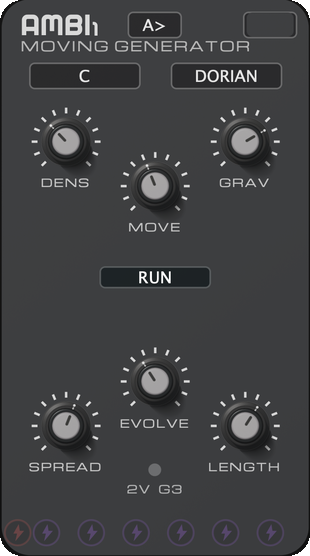
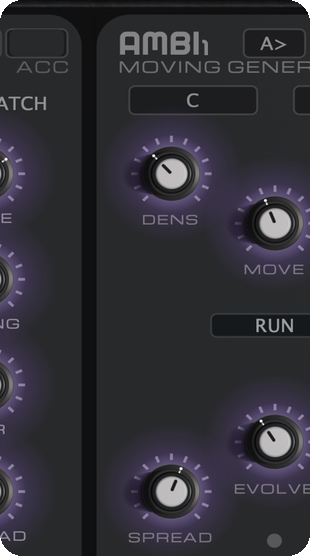
AMBI is a moving generator for evolving musical motion. It combines density, gravity, movement, spread, length and evolution controls so a patch can keep changing without needing a small committee of separate modulation modules.
Use it when you want motion that feels less like a repeating LFO and more like something that has somewhere to go.
A performer, not an oscillator
AMBI generates harmonically aware polyphonic note events on a selected Bus; it does not generate audio by itself. ROOT and SCALE define the tonal world, while DENS, MOVE, GRAV, SPREAD, EVOLVE and LENGTH decide how actively it explores it.
HARM
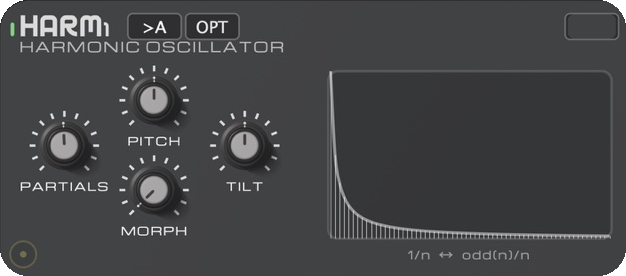
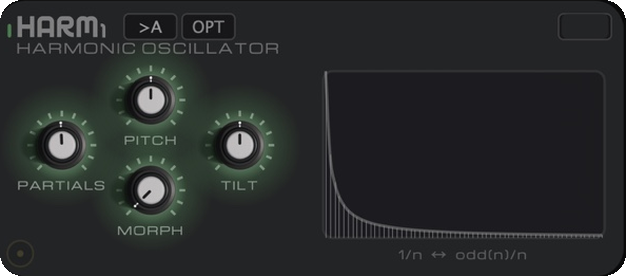
HARM is the harmonic oscillator. Instead of stopping at a conventional waveform, it lets you build and shape a spectrum from partials, including formula/drawing-oriented sound design.
It is particularly good when “saw or square?” is not a sufficiently unreasonable question.
Build the spectrum instead of choosing a waveform
HARM constructs sound from sinusoidal partials. Formula A and B can define two spectra, DRAW reshapes individual harmonics, and MORPH travels continuously between them. Try 1/n for a saw-like spectrum and odd(n)/n for a square-like one.
OSC
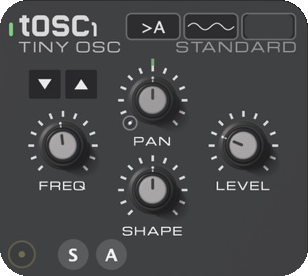
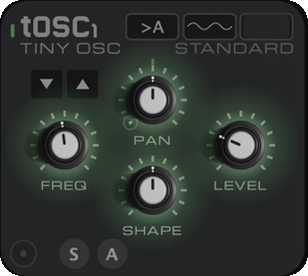
Oscillators are where a large part of the sound begins. OSC is the compact mono oscillator path; pOSC is its polyphonic relative. Use keyboard/pitch information to play them and route their audio onward to a filter, VCA or effect.
For a conventional instrument, continue with VCF / pVCF.
VCF
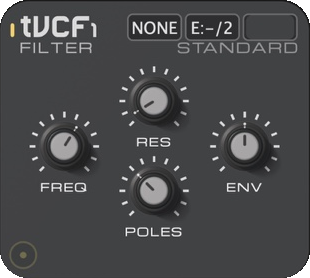
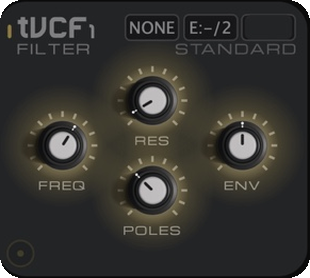
The filter shapes the spectrum of an audio signal. VCF is the mono path and pVCF belongs in polyphonic voices. Frequency is a prime modulation target; resonance can push a filter toward self-oscillation.
Keyboard tracking is useful when the filter should follow played pitch rather than behave like a fixed spectral shelf.
VCA
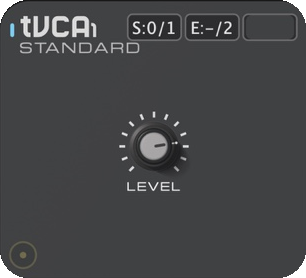
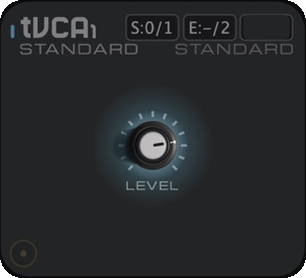
VCA is part of the current RFM Space module set. Its full manual text is still being written, but the real module front is already here — no imaginary knobs, no documentation fan fiction.
Documentation status
This module will get its controls, connections, examples and related tips in a coming manual update.
ENV
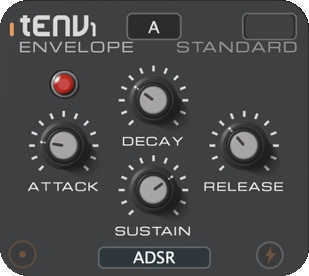
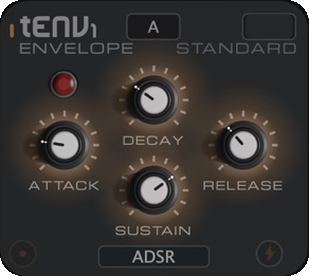
Envelopes create time-based control shapes. They are commonly used for VCA level and filter frequency, but nothing says you have to behave.
Trigger or gate the envelope, then route its modulation to the parameter you want to animate.
Envelope shape and Engine character are separate
The contour describes what the envelope does over time; the selected Engine changes its character. Change the response without rebuilding the patch.
RING
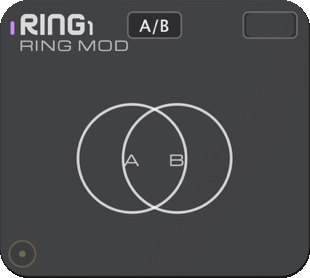
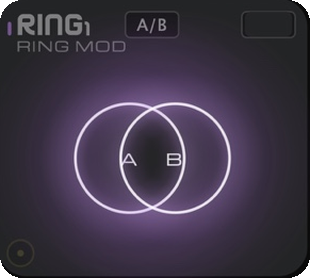
RING provides ring-modulation style audio processing. Feed it suitable audio sources and use the interaction between them to create metallic, sideband-rich and generally less domesticated sounds.
LFO
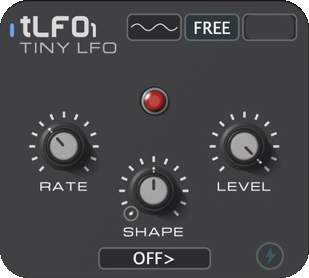

An LFO produces repeating modulation. Use it for vibrato, filter sweeps, tremolo, movement and all the other things that make a static patch stop sitting politely in the corner.
TURN
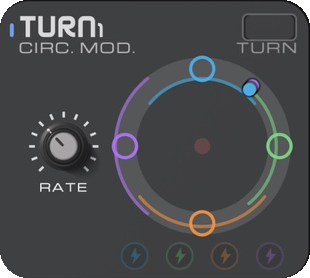
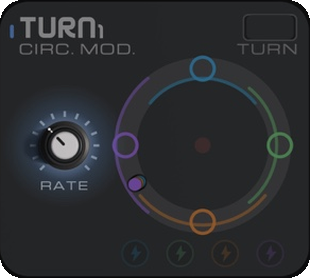
TURN is a circular modulation source with four outputs. It can create related movement around a shared circular idea, with direction, phase, shape, amount, points and chaos available per source.
TURN is for modulation that feels more like interacting motion than “here is another sine LFO.”
GLD
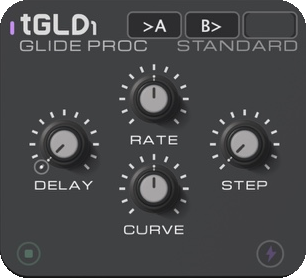
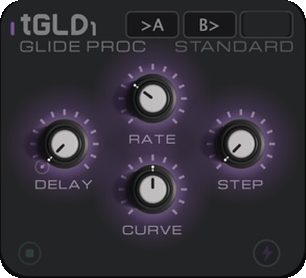
GLD adds glide/portamento to pitch-style control. Put it in the pitch path when notes should slide rather than jump immediately to the next value.
Glide with a job to do
GLD sits inside a pitch or control path. RATE controls glide speed and STEP can make movement rhythmic. Combine it with QNT in either order: glide into quantised destinations, or quantise first and glide between them.
QNT
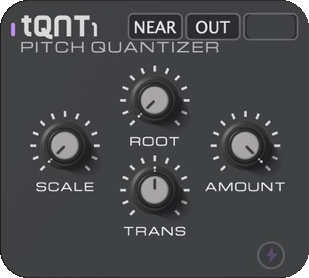

QNT constrains continuous control or pitch information to discrete values. It is useful for turning free modulation into stepped or musically constrained movement.
Musical constraints, not handcuffs
QNT constrains pitch/control data to a ROOT and SCALE and can quantise to the nearest, upward or downward destination. Particularly useful when a generative patch may wander but the notes should not.
S&H

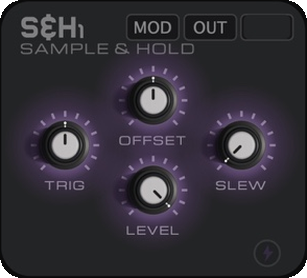
S&H samples a control value and holds it until the next sampling event. Feed it changing modulation and a clock/gate source to create stepped random or patterned control.
MAP
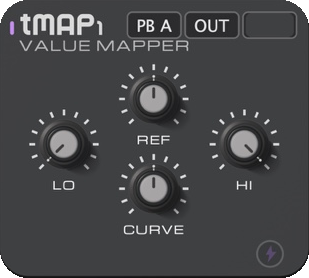
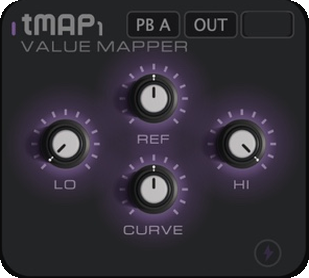
MAP is part of the current RFM Space module set. Its full manual text is still being written, but the real module front is already here — no imaginary knobs, no documentation fan fiction.
Documentation status
This module will get its controls, connections, examples and related tips in a coming manual update.
SWCH

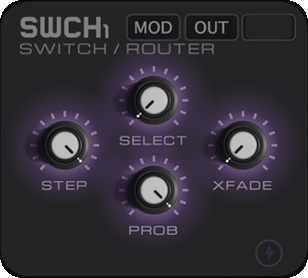
SWCH switches control/signal paths. Use it when the patch should choose between sources or destinations instead of keeping one fixed route forever.
PROC
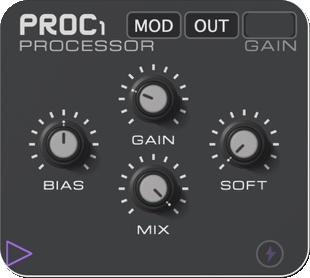
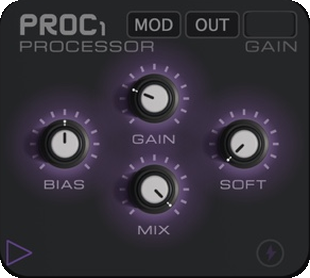
PROC modifies a modulation/control signal before it reaches its destination. It is the module for situations where the source is basically right, but needs manners.
Quick start
Put PROC between a modulation source and its target:
source → PROC → target
A practical example is smoothing ARP accent.
Engines
PROC currently provides twelve processing engines:
| Engine | What it is useful for |
|---|---|
| GAIN | Scale a signal, add bipolar bias and optionally soften it with saturation. |
| SHAPE | Bend the response curve and morph toward a sine-shaped response. |
| CLIP | Restrict a signal between independently chosen low and high boundaries. |
| DEADZONE | Ignore a region around a movable centre. Useful for making small movements do nothing. |
| FOLD | Wavefold a control signal for more complex movement. Subtle is optional. |
| QUANT | Reduce a continuous signal to 2–64 discrete levels. |
| COMPARE | Turn a continuous signal into threshold-based states, with hysteresis to prevent nervous switching. |
| SLEW | Smooth changes with independent rise and fall behaviour. Excellent for taming abrupt modulation. |
| S&H | Sample and hold a value when the trigger condition is met. |
| RECTIFY | Half/full-wave style processing for reshaping bipolar movement. |
| WRAP | Wrap values around the range instead of simply clipping them. |
| LIMIT | Dynamic limiting using threshold, ratio and makeup gain. |
Every engine also provides MIX, so you can blend the processed result with the original signal.
Why would I want this?
Suppose ARP ACC makes a filter jump too sharply. You could decide that brutal filter jumps are your new artistic direction. Or use SLEW and make the movement smoother.
PROC is also useful between LFOs and targets, before quantization, for turning smooth modulation into stepped patterns, and for generally abusing control signals until something interesting happens.
See also
Modulation · ARP · QNT · S&H
CHR
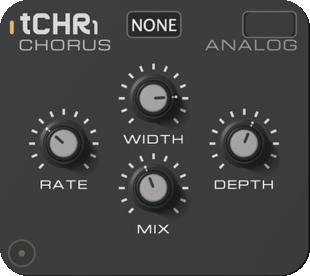
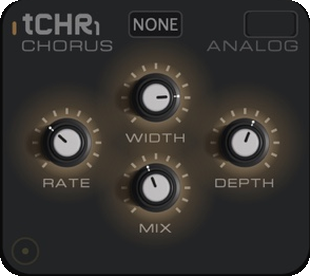
CHR is part of the current RFM Space module set. Its full manual text is still being written, but the real module front is already here — no imaginary knobs, no documentation fan fiction.
Documentation status
This module will get its controls, connections, examples and related tips in a coming manual update.
DLY
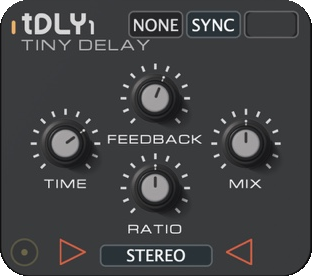
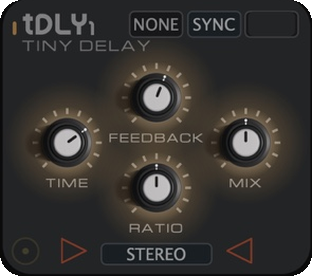
DLY is part of the current RFM Space module set. Its full manual text is still being written, but the real module front is already here — no imaginary knobs, no documentation fan fiction.
Documentation status
This module will get its controls, connections, examples and related tips in a coming manual update.
FLD
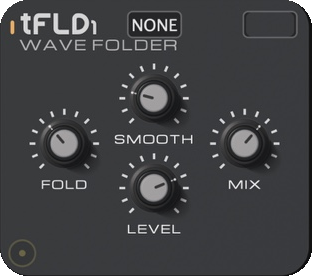

FLD is part of the current RFM Space module set. Its full manual text is still being written, but the real module front is already here — no imaginary knobs, no documentation fan fiction.
Documentation status
This module will get its controls, connections, examples and related tips in a coming manual update.
FLG
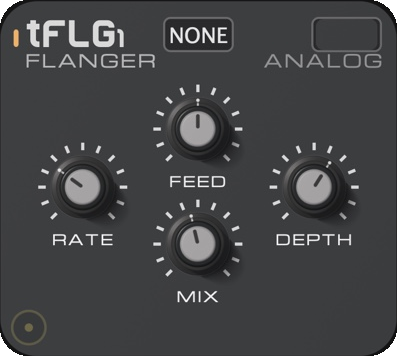

FLG is part of the current RFM Space module set. Its full manual text is still being written, but the real module front is already here — no imaginary knobs, no documentation fan fiction.
Documentation status
This module will get its controls, connections, examples and related tips in a coming manual update.
PHS
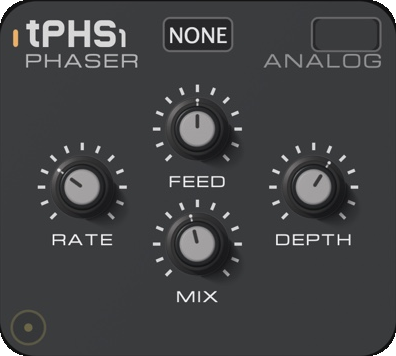

PHS is part of the current RFM Space module set. Its full manual text is still being written, but the real module front is already here — no imaginary knobs, no documentation fan fiction.
Documentation status
This module will get its controls, connections, examples and related tips in a coming manual update.
RVB
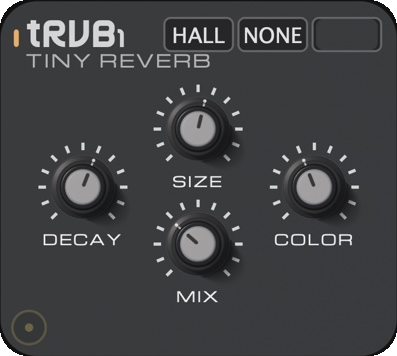
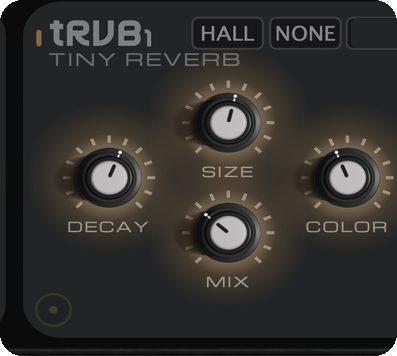
RVB is part of the current RFM Space module set. Its full manual text is still being written, but the real module front is already here — no imaginary knobs, no documentation fan fiction.
Documentation status
This module will get its controls, connections, examples and related tips in a coming manual update.
SEQ
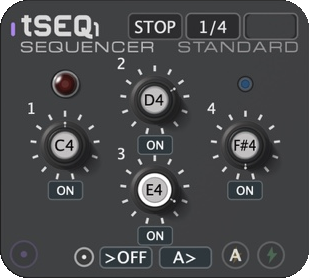

SEQ is the compact sequencer and can work with several sequencing engines, including conventional step sequencing and less conventional ways of deciding what happens next.
Use it for pitch/control patterns, rhythmic gates and articulated sequences. Current sequence work also includes ACCENT and SLIDE information, making SEQ useful for bassline-style patches as well as more general modulation.
Where to start
Start with a simple short pattern, route its pitch/control output to an oscillator path and its gate to an envelope. Once that works, then turn on the clever engines. Debugging six clever ideas at once is technically possible and spiritually questionable.
See also
PATT · GLD · Gates & Triggers
The sequencer is a host
SEQ keeps its place, timing context and routing while its Engine decides how events are generated. Straight sequencing, ratchets, Euclidean rhythm, random walk and grid patterns can all be behaviours of the same host.
ARP
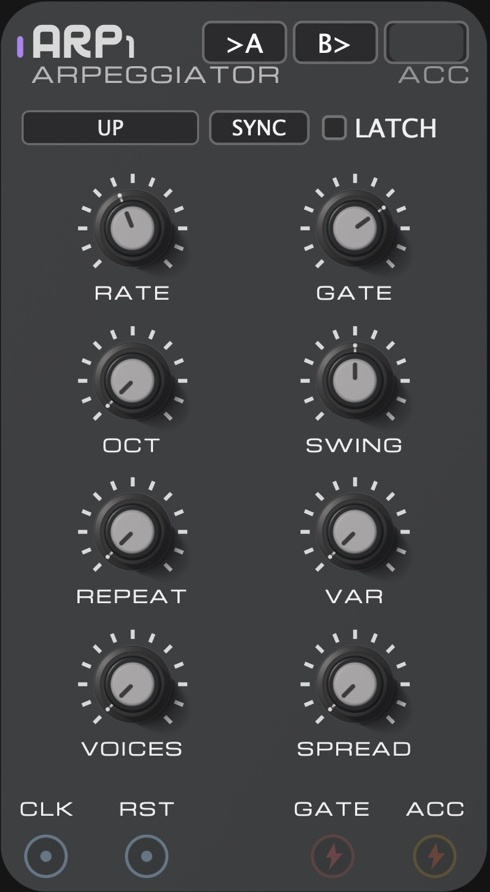
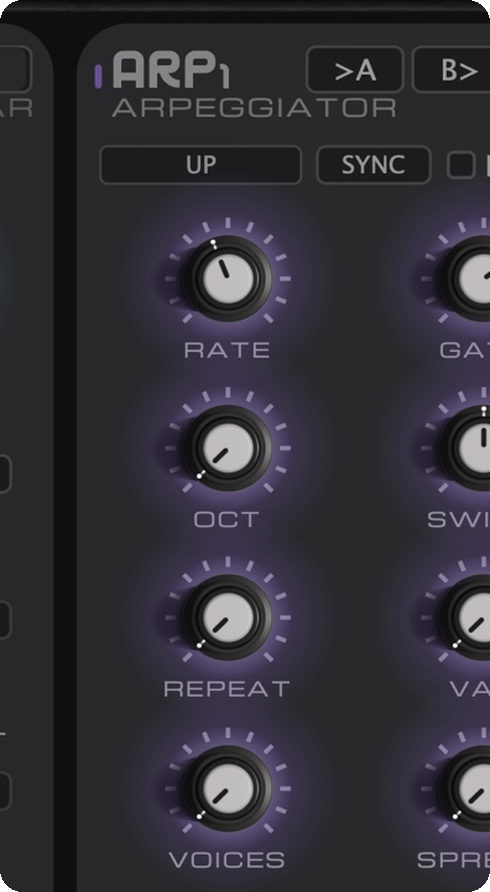
ARP is the arpeggiator: feed it notes and it turns them into a repeating musical pattern.
It has its own input/output bus handling and provides performance controls for pattern behaviour, sync and latch.
Accent
ARP can generate a repeating ACC pattern independently of the arpeggio order. Accent division can be OFF or every 2–16 steps, with an amount of 25%, 50%, 75% or 100%.
The accent phase resets with the pattern/reset state, so it remains rhythmically predictable — assuming you consider your patch predictable at this point.
The ACC output becomes particularly useful when routed through PROC and then into something like filter frequency.
Try this
ARP ACC → PROC (SLEW) → VCF FREQ
This turns hard accent jumps into a smoother rhythmic filter movement. See the complete Smooth an ARP Accent tutorial.
See also
PATT
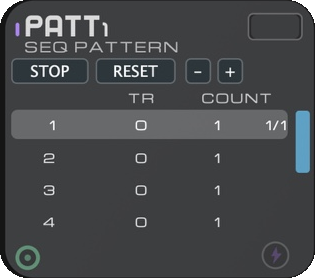
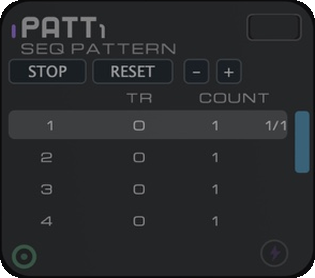
PATT arranges patterns into a larger structure. Rows can alter transpose and repetition count, letting a short sequence become a longer musical form without copying the sequence itself until everyone gets bored.
PERF
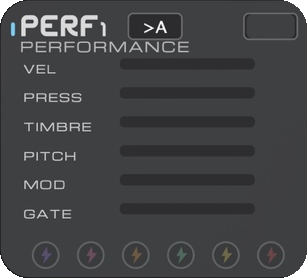
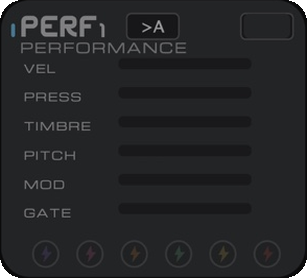
PERF exposes performance information such as pitch, velocity, pressure, timbre, wheel and gate so it can become part of the patch. This is especially useful for expressive MIDI and MPE playing.
Performance data becomes patch material
PERF turns velocity, pressure, timbre/CC74, pitch expression, modulation wheel and gate into routable sources. Channel and MPE filtering keep expression attached to the voice that produced it.
XTRCT
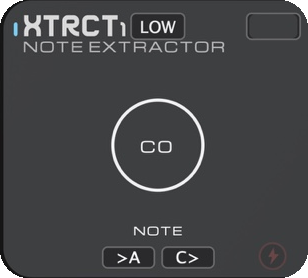
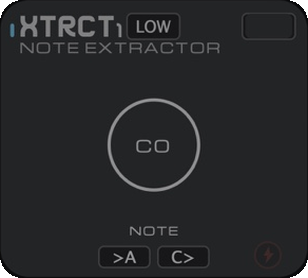
XTRCT extracts selected note information from incoming performance data — useful when a polyphonic input needs to produce a particular melodic/control line.
KEY
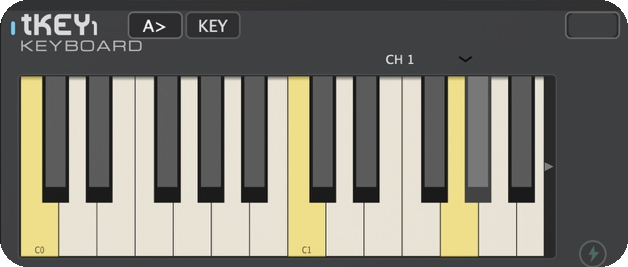
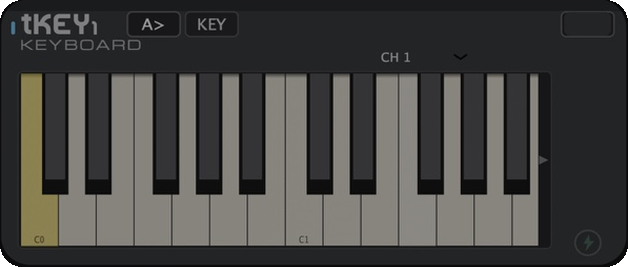
KEY is the on-screen/playable keyboard module and a convenient keyboard source inside a Space. New instances default around the useful musical register rather than requiring a trip from the basement first.
CTRL
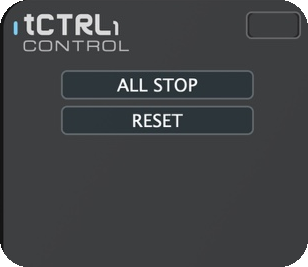
CTRL is part of the current RFM Space module set. Its full manual text is still being written, but the real module front is already here — no imaginary knobs, no documentation fan fiction.
Documentation status
This module will get its controls, connections, examples and related tips in a coming manual update.
VIRA

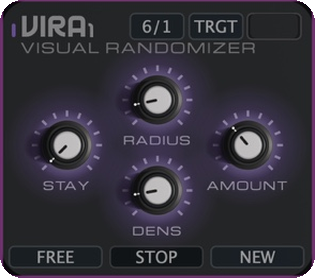
VIRA is part of the current RFM Space module set. Its full manual text is still being written, but the real module front is already here — no imaginary knobs, no documentation fan fiction.
Documentation status
This module will get its controls, connections, examples and related tips in a coming manual update.
CLOXZ
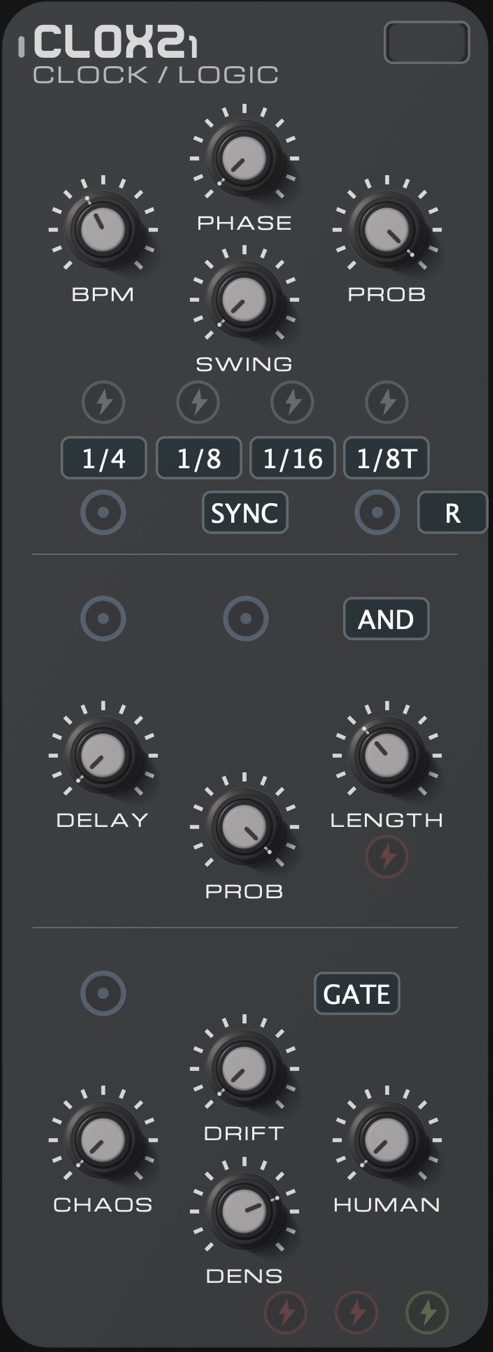
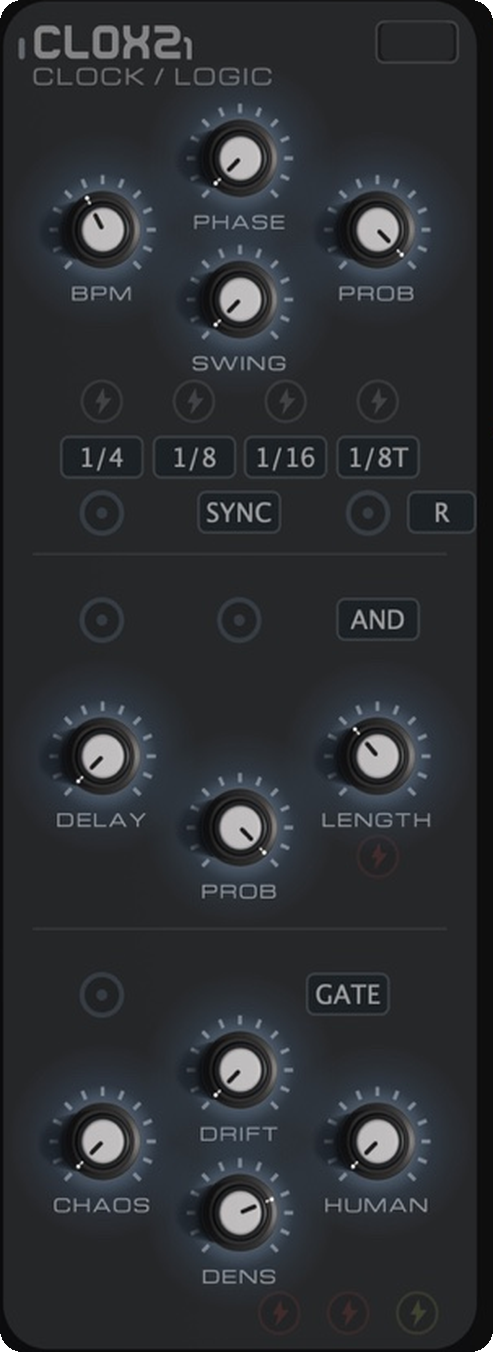
CLOXZ is the timing, gate and logic toolbox: clocking, divisions/multiplications, logic and gate processing live here. If a patch needs to know when rather than merely what, CLOXZ is likely involved.
Clock, gate, logic and generative timing
CLOXZ goes well beyond a metronome. It combines musical clock divisions with swing, gate processing, logic and controlled irregularity. DELAY, LENGTH and PROB shape gates; CHAOS, DRIFT, DENS and HUMAN move the result away from rigid repetition.
ENVI

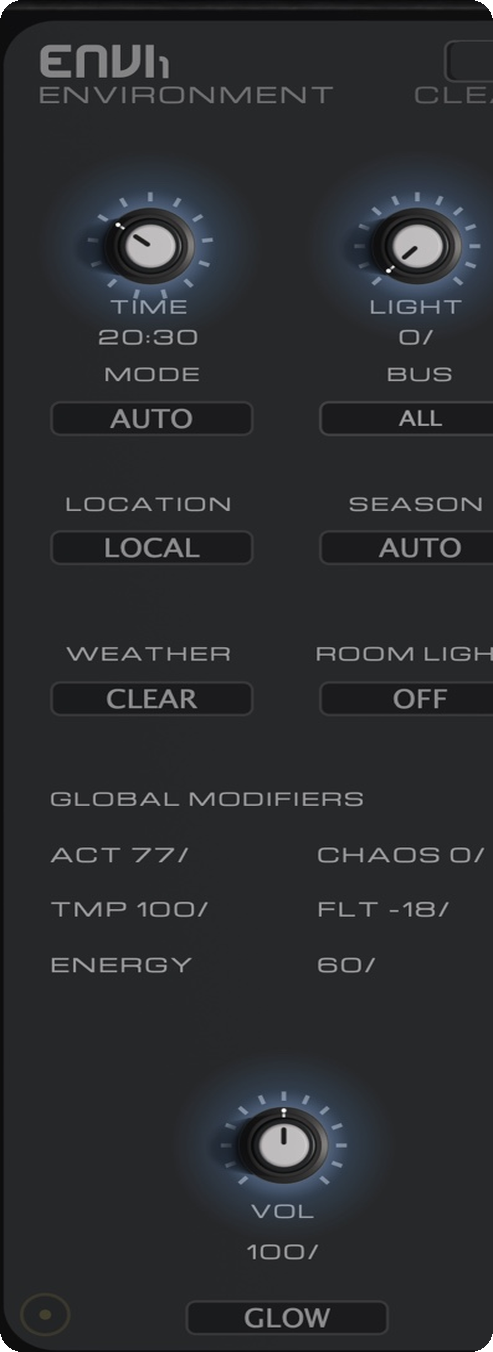
ENVI combines an environmental visual scene with weather-related sound and modulation ideas. It is deliberately less “laboratory module” and more “apparently it is raining inside the synthesizer.”
Atmosphere belongs to the Space
ENVI controls rack-wide environmental behaviour rather than acting like an ordinary voice module. Weather states include clear, cloud, fog, rain, snow and storm, with TIME providing continuous movement through the environment.
SCOPE
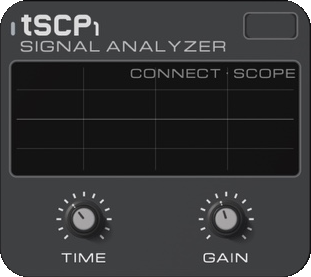
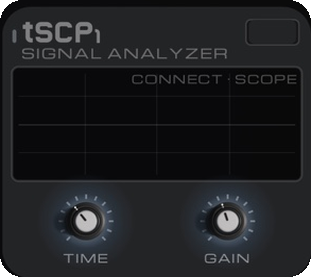
SCOPE lets you inspect a signal visually. It is useful for understanding modulation and waveforms, and occasionally for proving that the signal really is doing the ridiculous thing you thought you heard.
MON


MON is part of the current RFM Space module set. Its full manual text is still being written, but the real module front is already here — no imaginary knobs, no documentation fan fiction.
Documentation status
This module will get its controls, connections, examples and related tips in a coming manual update.
LABEL
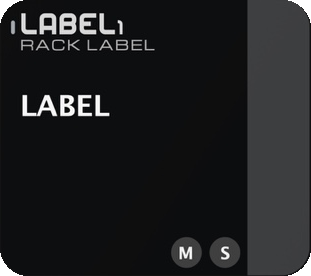

LABEL is part of the current RFM Space module set. Its full manual text is still being written, but the real module front is already here — no imaginary knobs, no documentation fan fiction.
Documentation status
This module will get its controls, connections, examples and related tips in a coming manual update.
pOSC

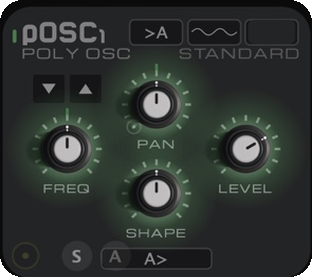
pOSC is part of the current RFM Space module set. Its full manual text is still being written, but the real module front is already here — no imaginary knobs, no documentation fan fiction.
Documentation status
This module will get its controls, connections, examples and related tips in a coming manual update.
pVCF
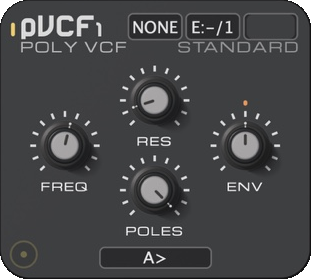
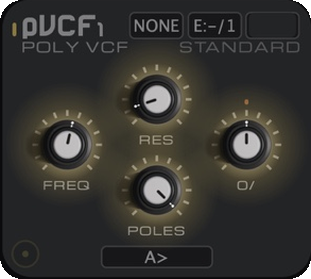
pVCF is part of the current RFM Space module set. Its full manual text is still being written, but the real module front is already here — no imaginary knobs, no documentation fan fiction.
Documentation status
This module will get its controls, connections, examples and related tips in a coming manual update.
pVCA
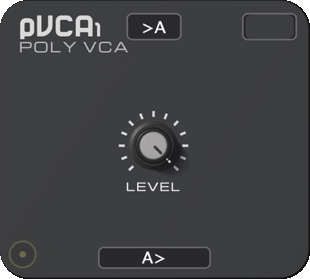
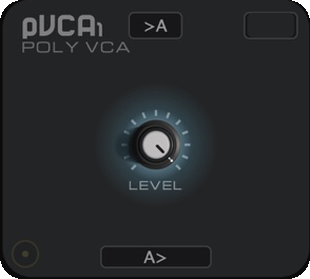
pVCA is part of the current RFM Space module set. Its full manual text is still being written, but the real module front is already here — no imaginary knobs, no documentation fan fiction.
Documentation status
This module will get its controls, connections, examples and related tips in a coming manual update.
pENV
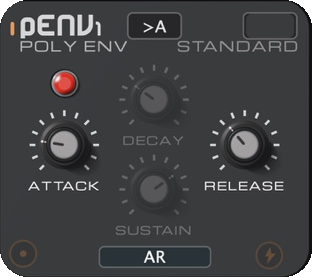
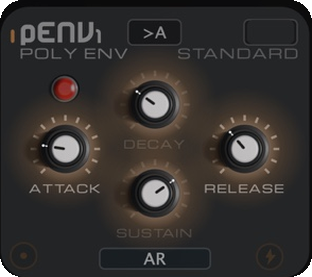
pENV is part of the current RFM Space module set. Its full manual text is still being written, but the real module front is already here — no imaginary knobs, no documentation fan fiction.
Documentation status
This module will get its controls, connections, examples and related tips in a coming manual update.
pLFO
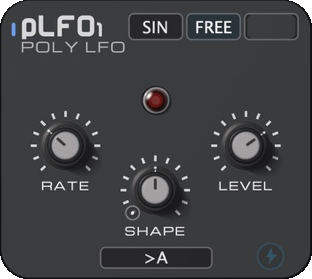
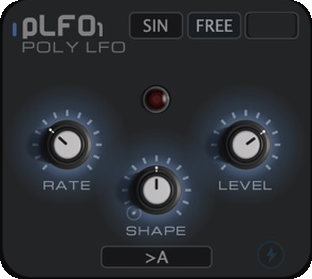
pLFO is part of the current RFM Space module set. Its full manual text is still being written, but the real module front is already here — no imaginary knobs, no documentation fan fiction.
Documentation status
This module will get its controls, connections, examples and related tips in a coming manual update.
pGLD

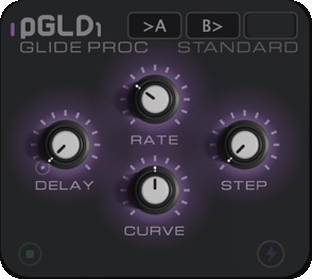
pGLD is part of the current RFM Space module set. Its full manual text is still being written, but the real module front is already here — no imaginary knobs, no documentation fan fiction.
Documentation status
This module will get its controls, connections, examples and related tips in a coming manual update.
pCHRD

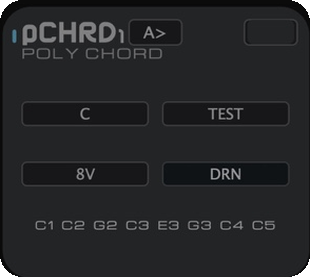
pCHRD is part of the current RFM Space module set. Its full manual text is still being written, but the real module front is already here — no imaginary knobs, no documentation fan fiction.
Documentation status
This module will get its controls, connections, examples and related tips in a coming manual update.